Walking Directions: Continue walking north on S. Franklin. All of the Irish stops are along this road.
Introduction to Stop 8

Slide Show of the Grand Hotels 19th Century

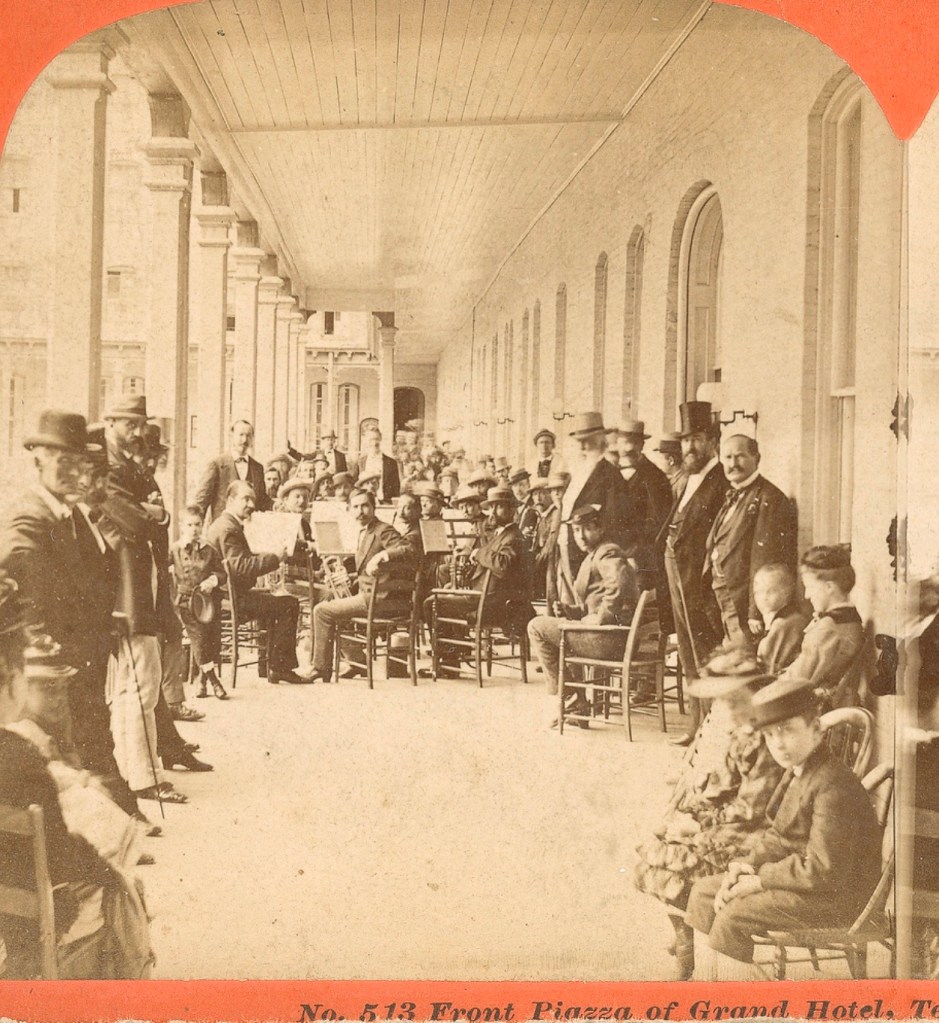
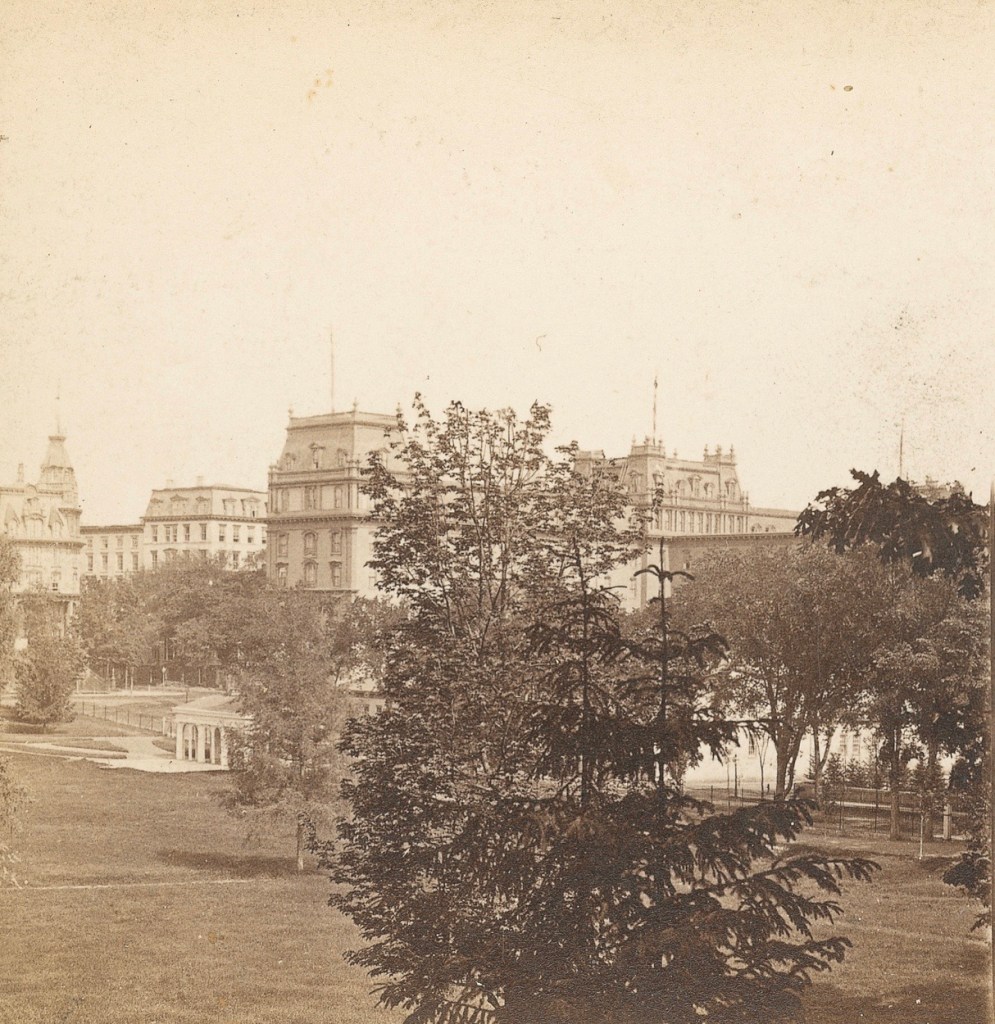

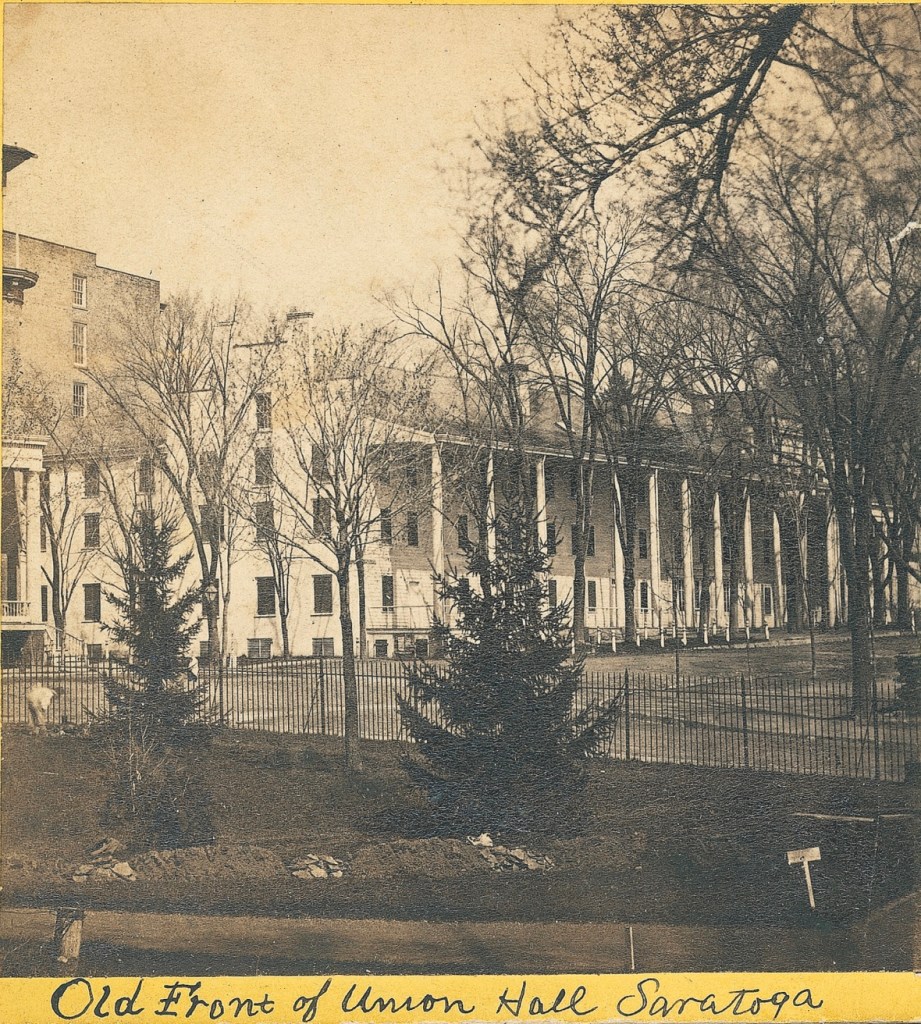

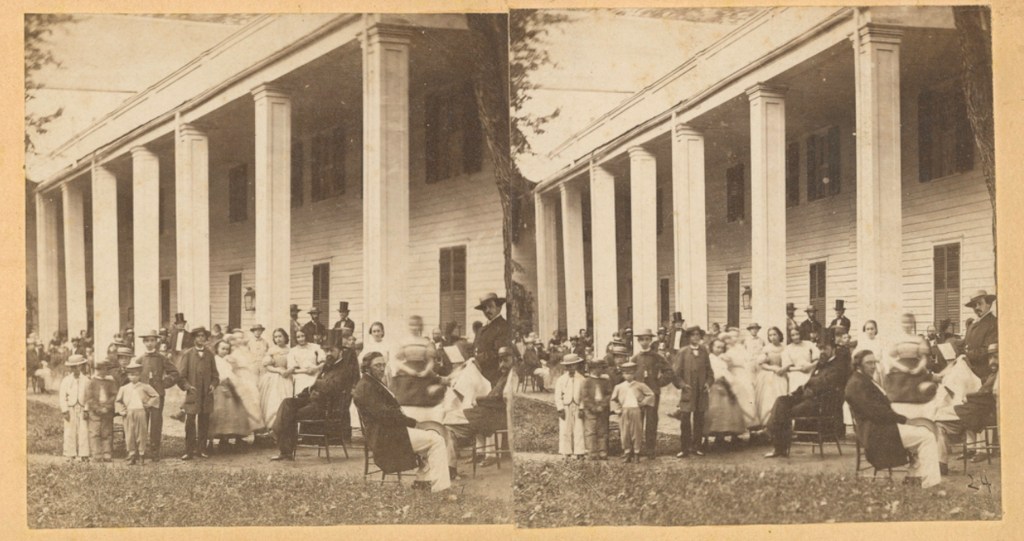
All of the photos in the slide show above are from the Robert Joki Stereoscopic Collection at the Saratoga Springs Public Library (Saratoga Room). Most are dated between 1875 and 1903
The Story
For much of the 19th century, Saratoga Springs was considered the “Queen of the Spa” resorts. After the civil war, the establishment of the race track and casino made the resort area even more attractive. The new train lines extending from Schenectady to Saratoga provided a relatively quick trip for the tourists of the Gilded Age. Upon arriving in Saratoga, the wealthy elite visitors like the Rockefellers, Vanderbilts and Asters had their pick of luxurious accommodations from among the several grand hotels lining Broadway.
The scale of many of these hotels was monumental. The largest, The Grand Union, covered seven acres with a large interior courtyard right on Broadway. The Grand Union had over 824 rooms available as well as cottages for the wealthy. The hotel’s dining room was capable of handling up to 1400 guests at a sitting ” with 35 cooks, 200 waiters, 12 carvers dispensing 1200 quarts of milk, 1500 pounds of beef, 80 chickens and 250 quarts of strawberries” or so the guide book of the day related. (Source: The Grand Union Hotel by Beatrice Sweeny, City Historian Saratoga Springs, New York).
The other grand hotels included the United States with close to 800 rooms and Congress Hotel with close to 600, as well as the Adelphi, the smallest of these establishments offering 150 rooms. Of all the Gilded Age hotels, the Adelphi is the only one remaining on Broadway. The heyday of these elite establishments began to fade by the early 20th century and most had either burned down or been demolished by the 1950s. The Adelphi was purchased and renovated in the late 1970s and remains a popular hotel on the main thoroughfare of Saratoga.
The area behind the grand hotels were much less opulent than the elegant buildings facing Broadway. Many boarding houses sprung up on the west side to accommodate all the newly arrived workers along Congress and Grand Street. Some of these buildings continued to be used to house seasonal workers later on as Saratoga grew into a gambling and racing resort area.
Listen:
In this audio clip recorded in 1999, Anita Turner recalls the people who would stay at her grandmother’s boarding house on Congress Street. Located behind the Grand Union Hotel on Congress, Georgia Lee Jackson Boarding House catered to the workers at the track and the restaurants. She ran a very strict establishment and didn’t allow any women who were not married to her boarders inside the building.
Artwork
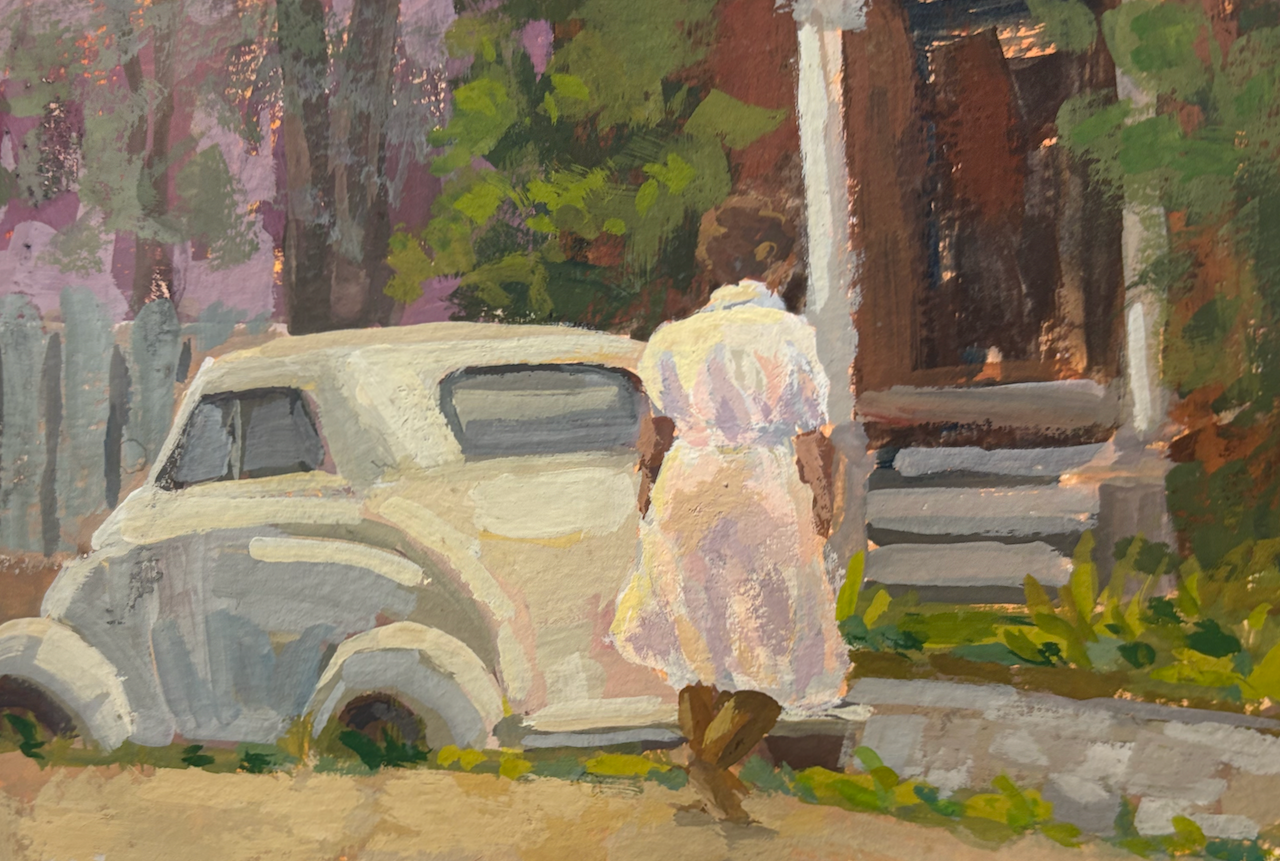
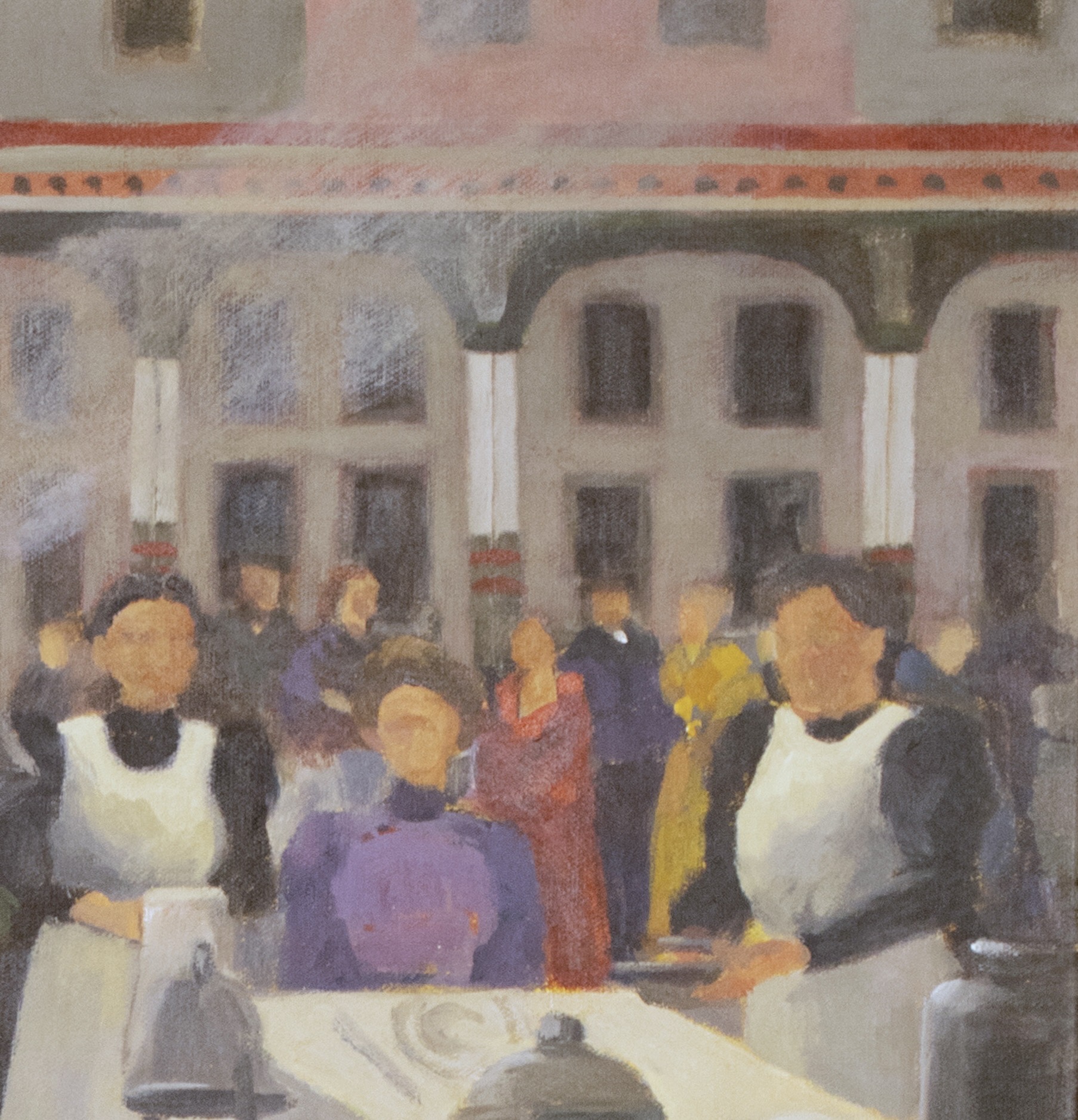
The first sketch is taken from a vintage photo of a hotel worker crossing S. Franklin presumably after finishing her shift at one of the hotels. The second is a detail of the larger Irish narrative painting.

