Walking Directions: Cross Oak Street and look up and down South Franklin. The St. Michael’s parade would have come down South Franklin street from St. Peter’s church. After this stop you will head back up to Beekman and turn left in front of 68 Beekman (the red brick building) to continue.
Introduction to Stop 5


Listen
In the clips below, Ralph Grasso Jr. describes how the streets were decorated with lights and the path of the parade as it came by his house which is the house mentioned in the previous restaurant stop. The Grasso’s were known for their famous Italian ice truck and also owned a fish store at 62 Beekman Street.
The Story
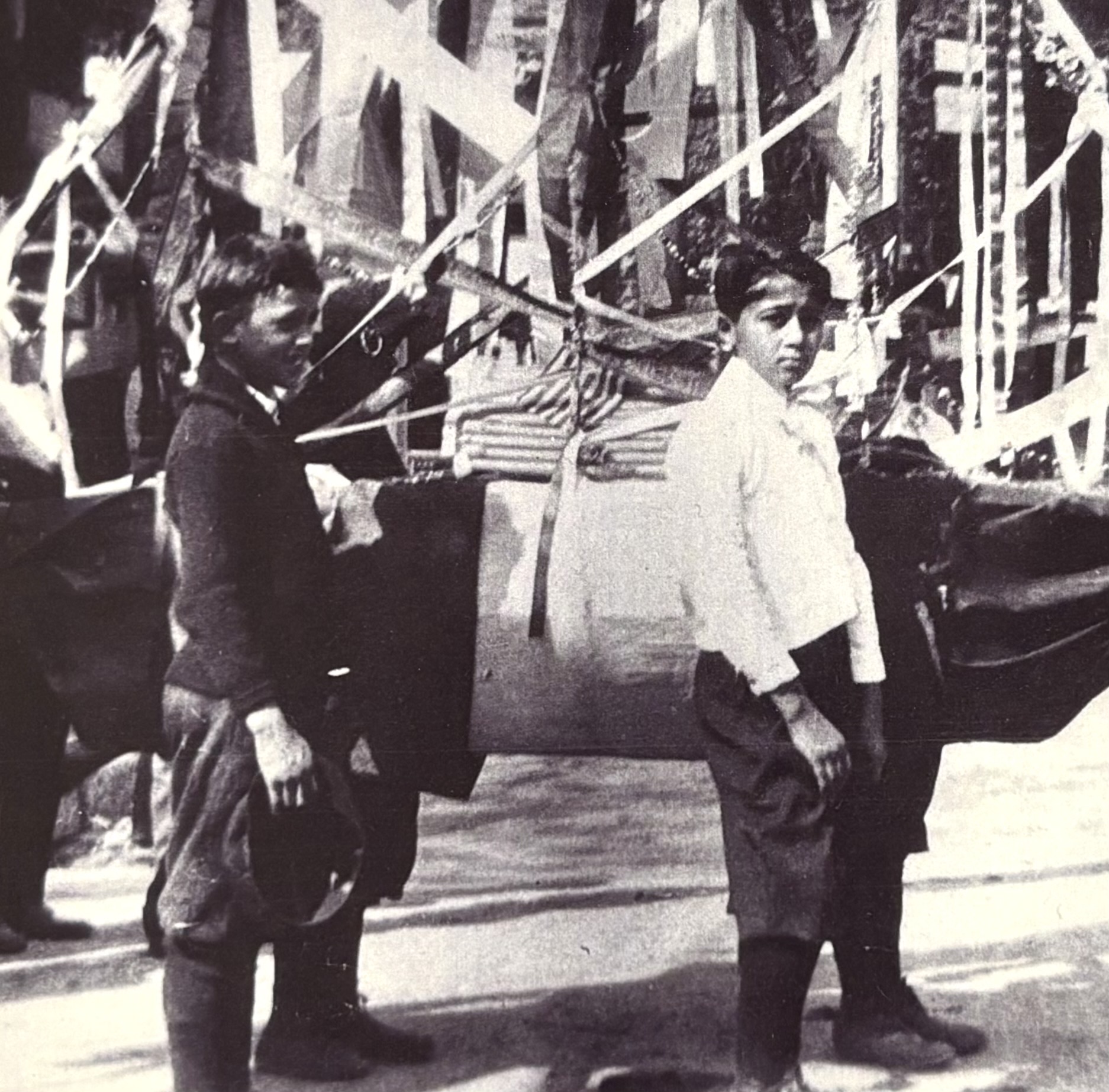
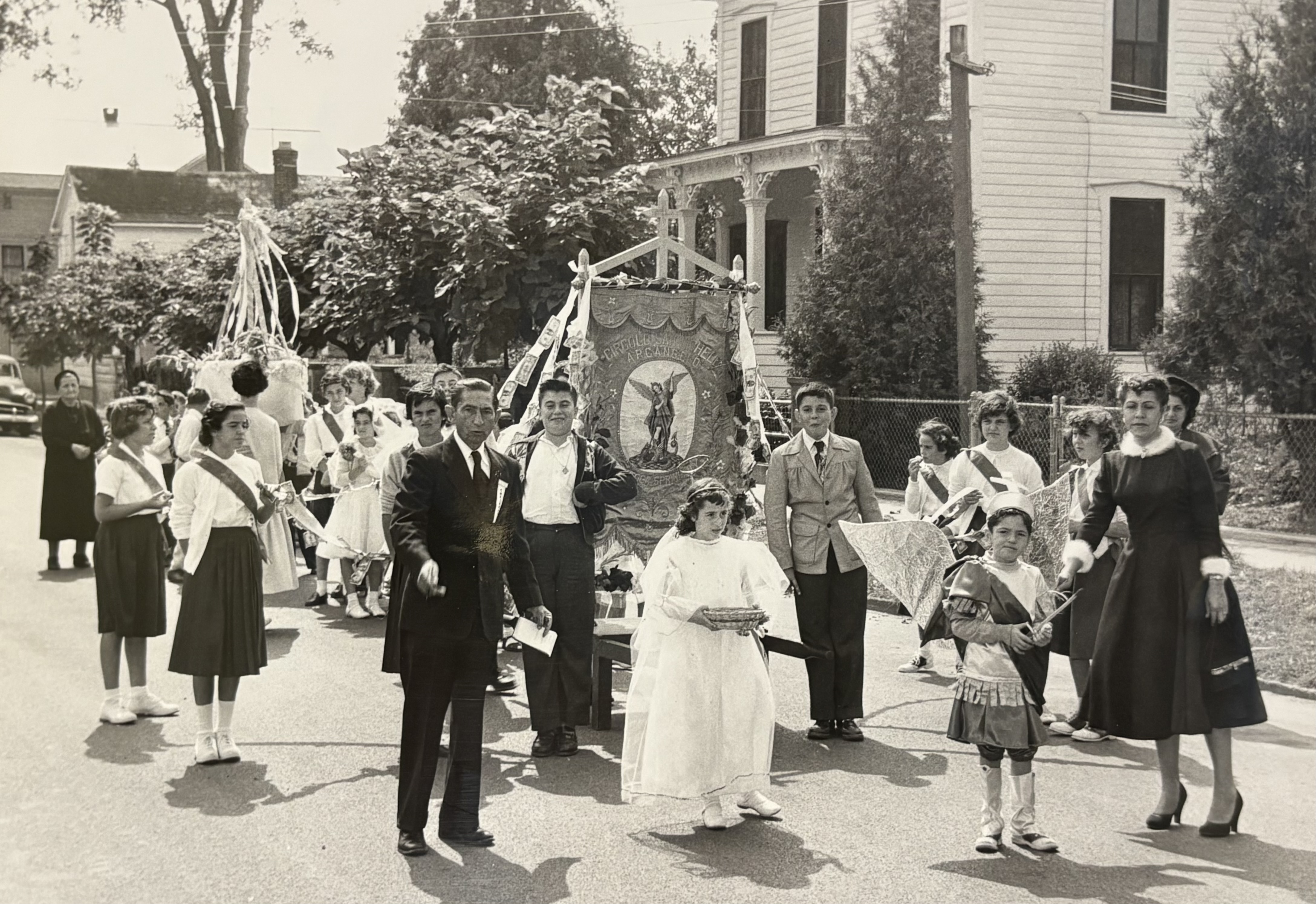
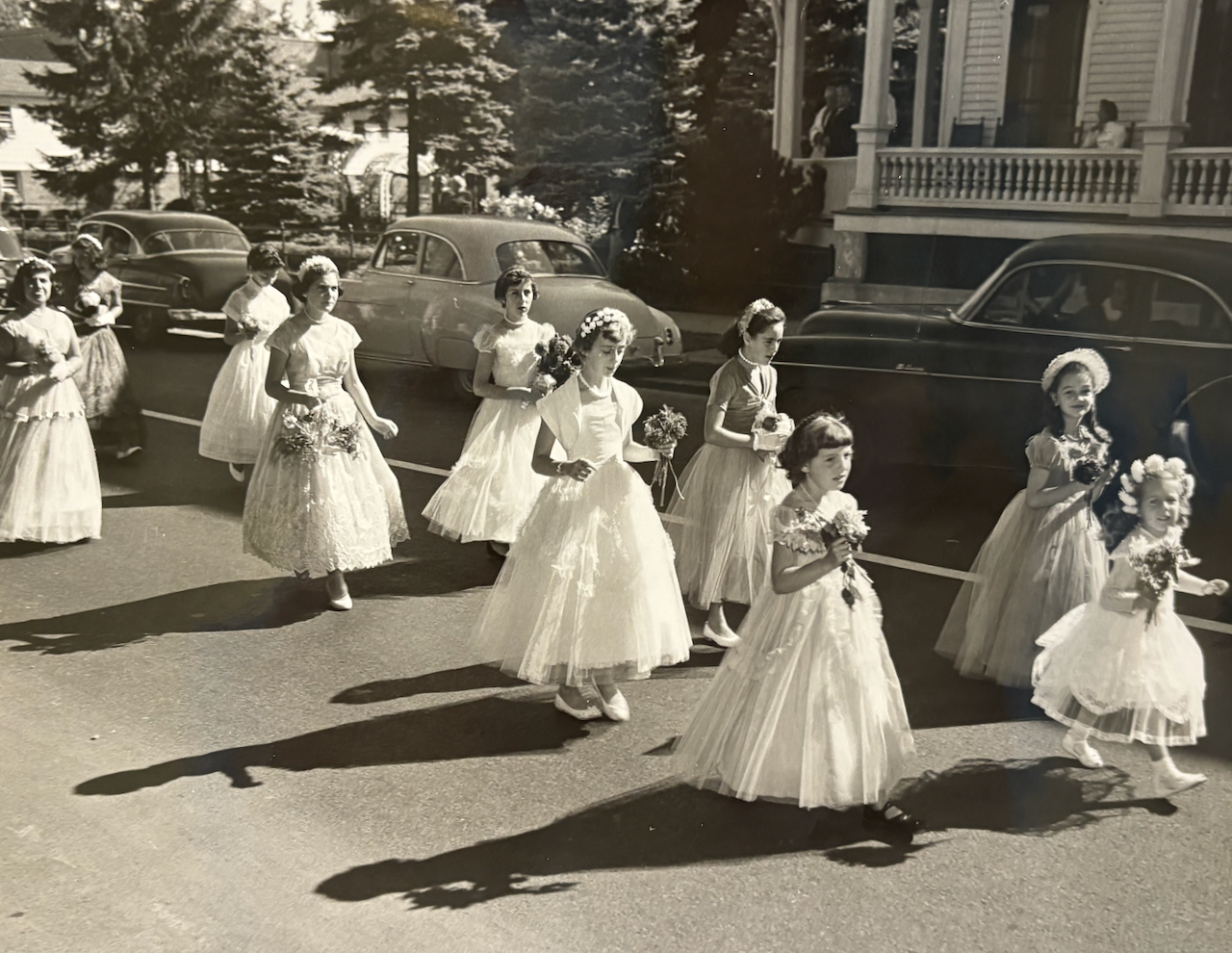
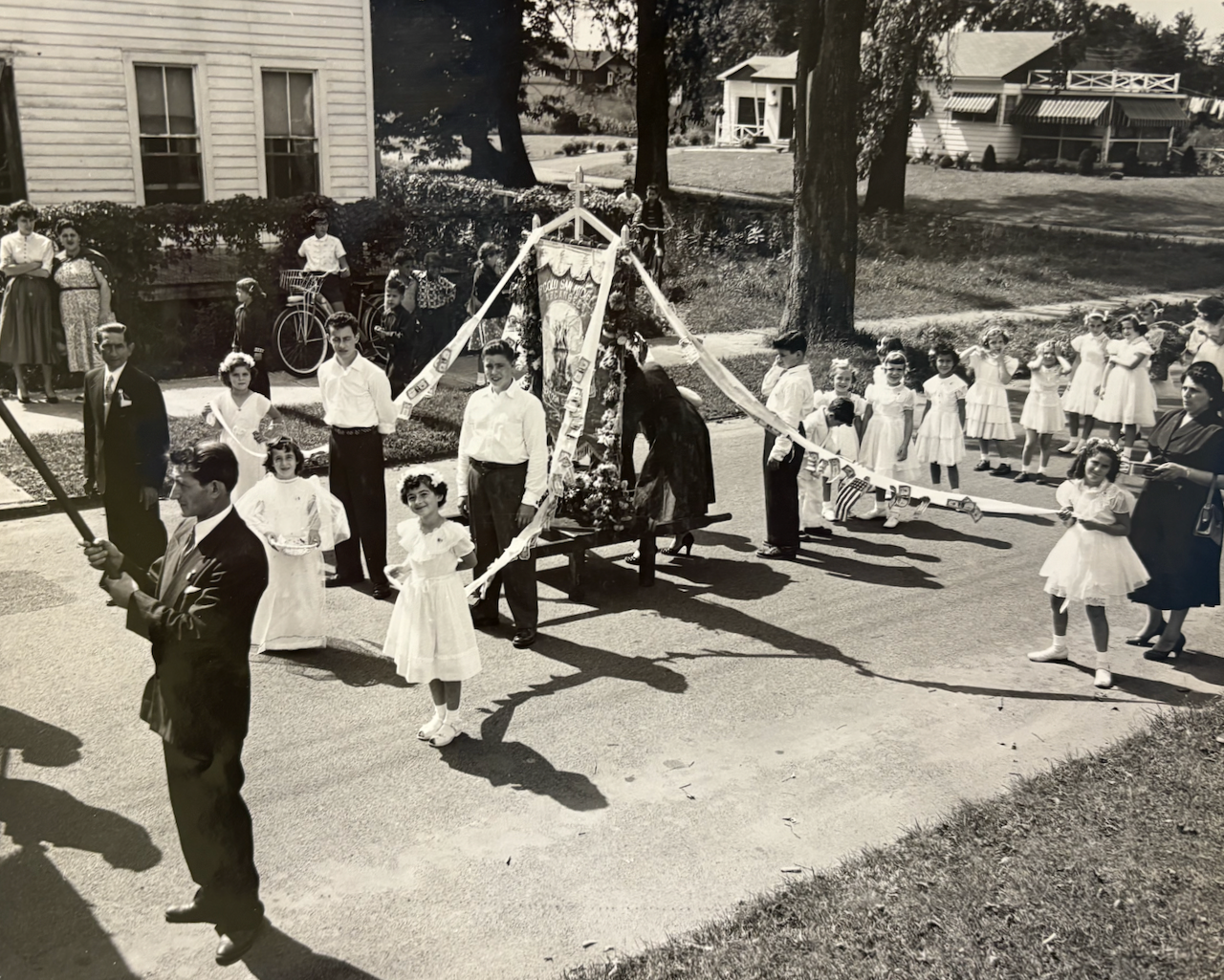
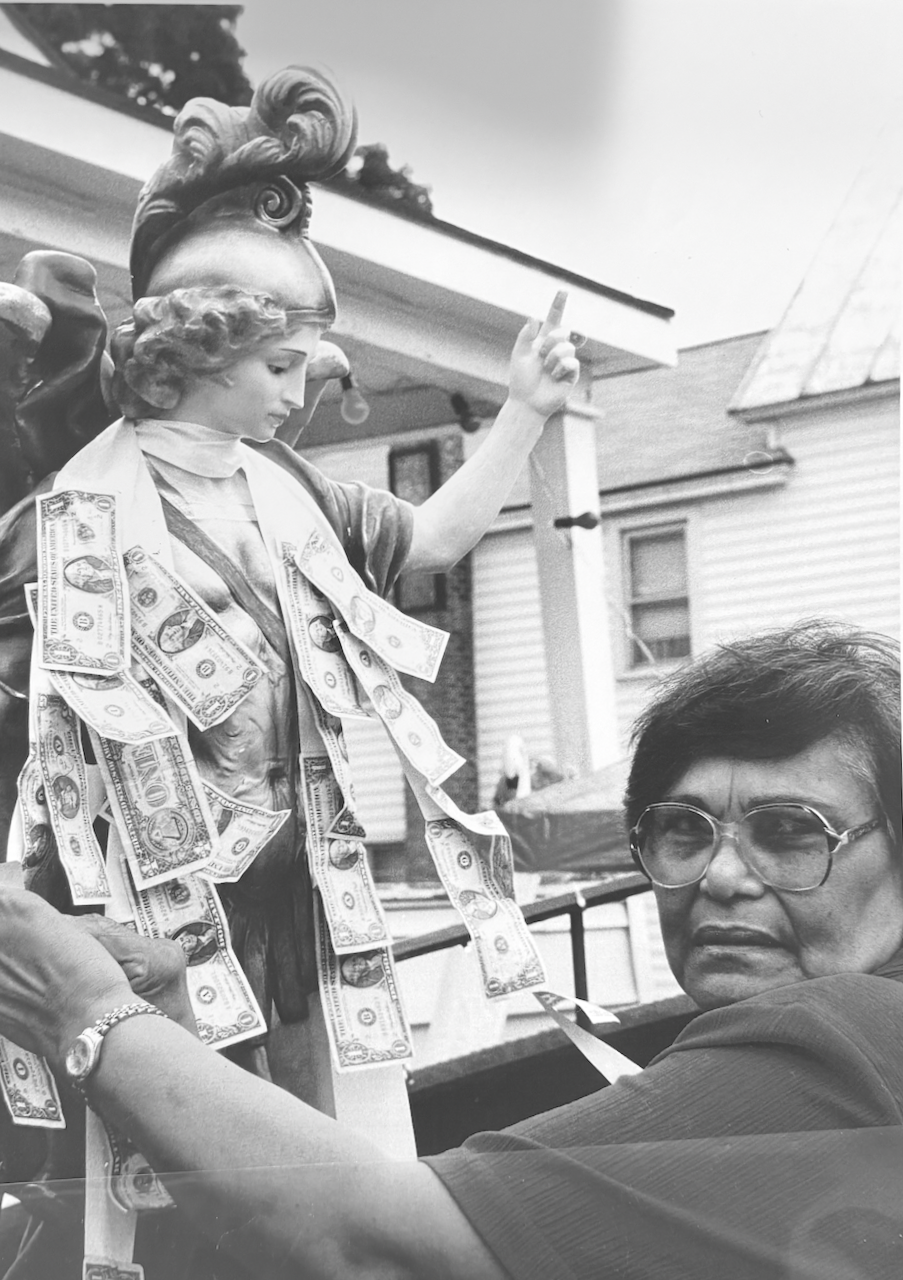
The Feast of St. Michael is an important event in west side history. The festival and parade were first held on Sept. 29, 1914 and were organized by the Principessa Elena Society. The event started with a mass at St. Peter’s church and then a parade through the streets of the west side. A marching band led the procession and a statue of St. Michael was carried through the streets. For the story of Luis Bencievenga and the origins of the white satin ribbon covered parade float see the image and text below.
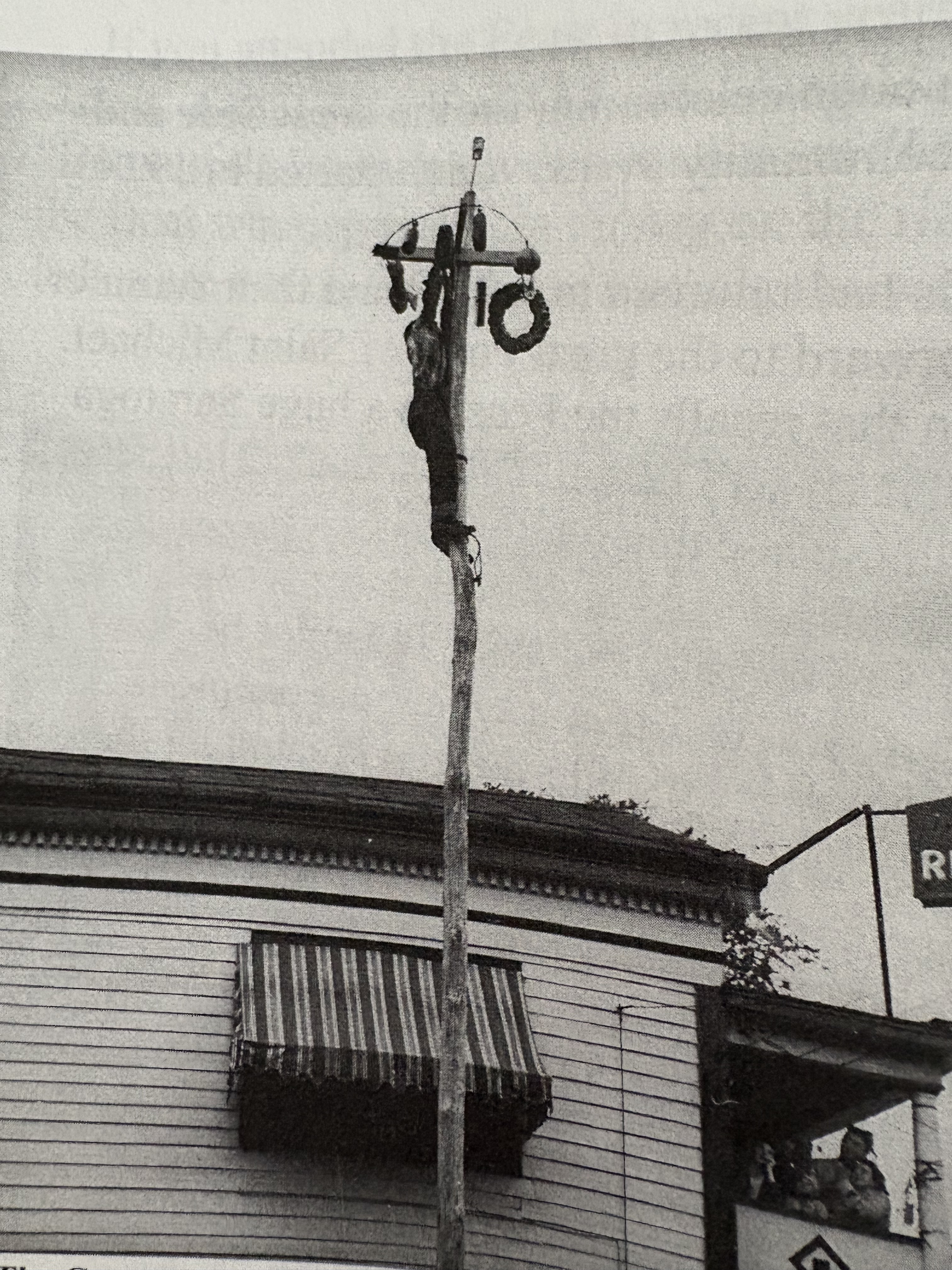
The Feast was a lively celebration that lasted three days. The streets were lit up with string lights and a bandstand was set up in the middle of the street at the intersection of Beekman and Oak Streets for live music and entertainment. Young girls wore white dresses, the young men wore suits and all the men of the Principessa Elena Society marched together to honor the Saint. There were pie eating contests, a greased pole climbing contest, booths for games and, of course, there was the food.
For weeks beforehand, the women of the neighborhood worked together preparing homemade meatballs, cannolis, pizelles and other traditional Italian foods to be sold in the booths, storefronts and porches of Beekman Street during the festival. The restaurants made pizza and other specialties specifically for the festival.
The Artwork
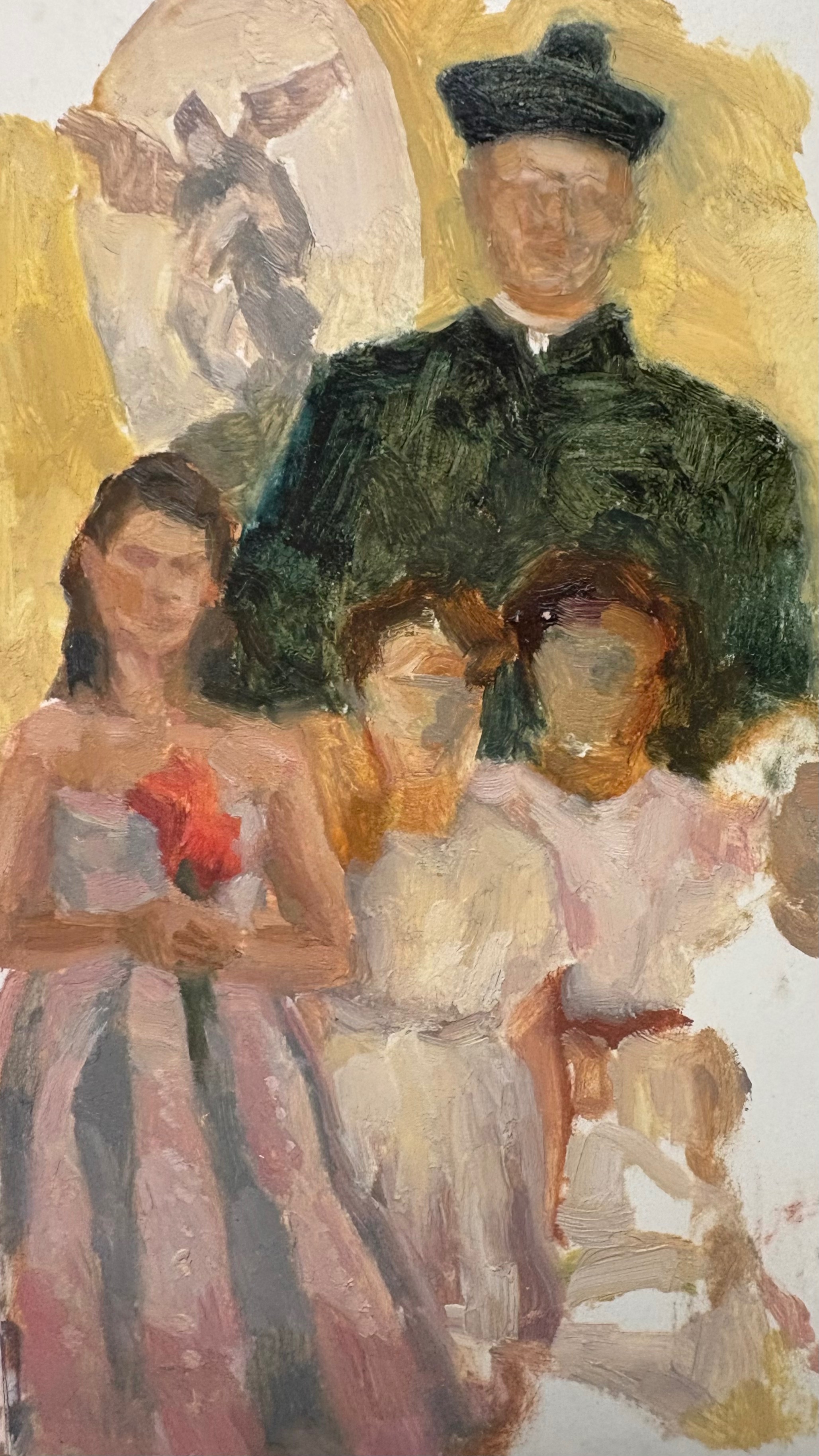
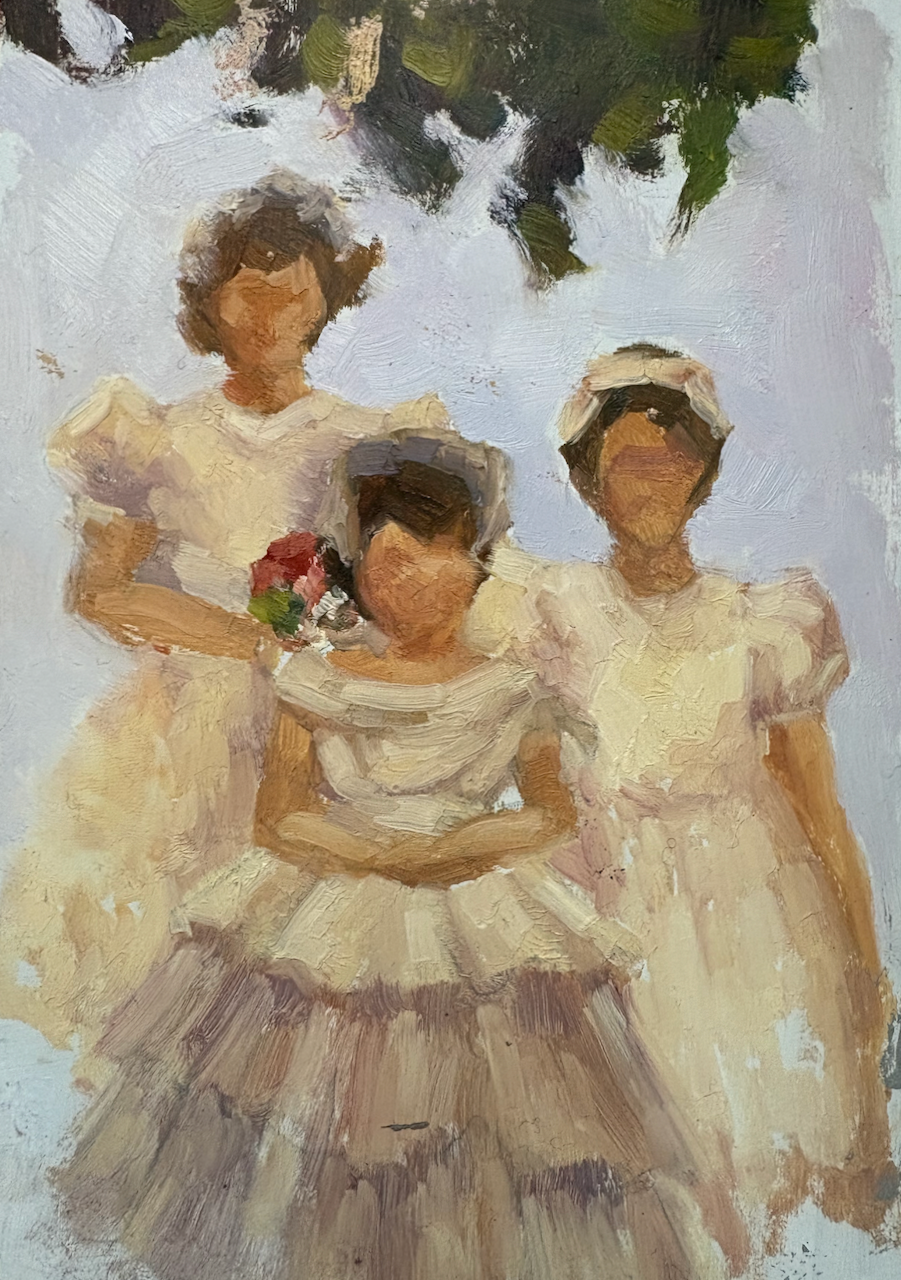
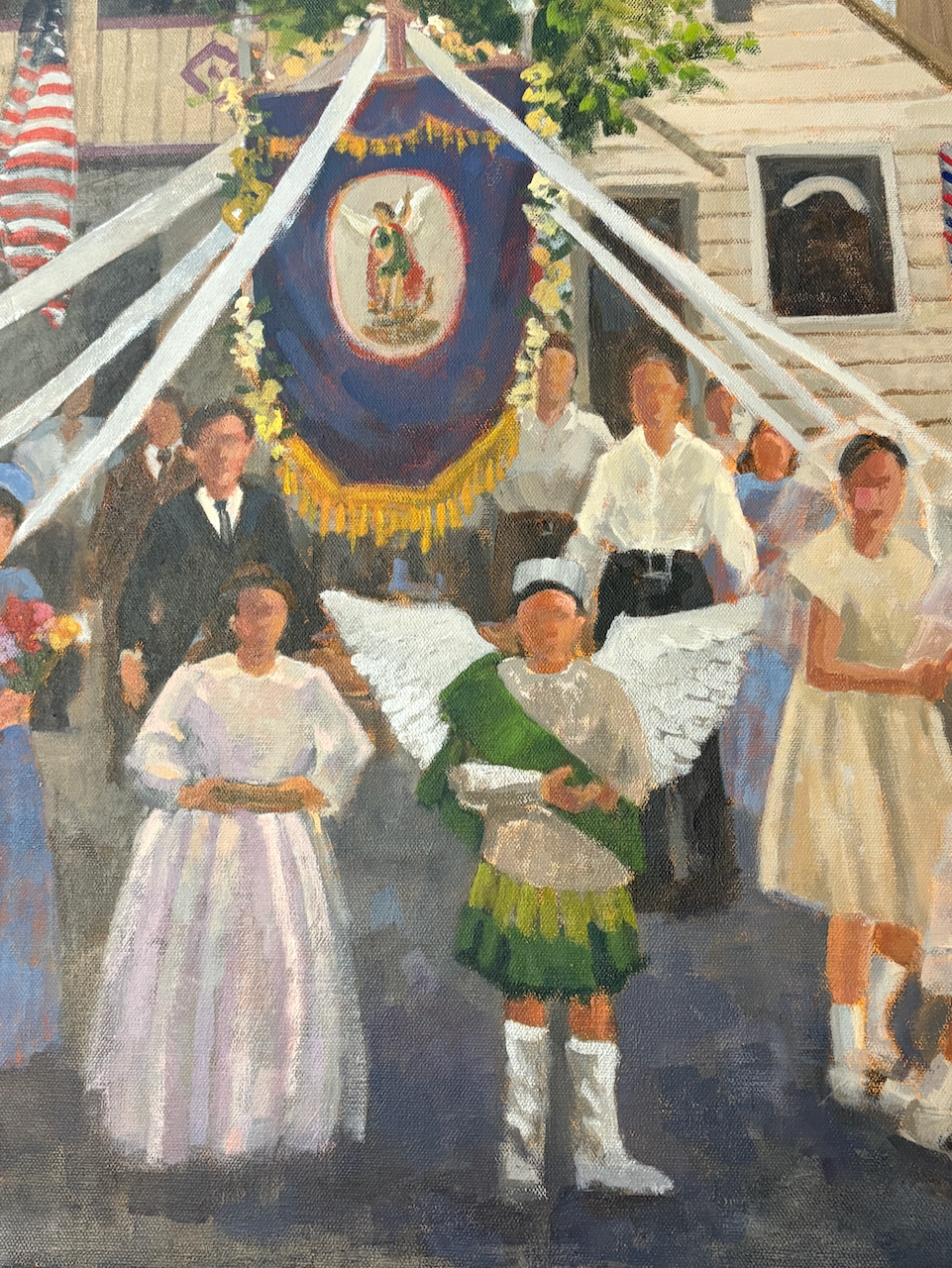
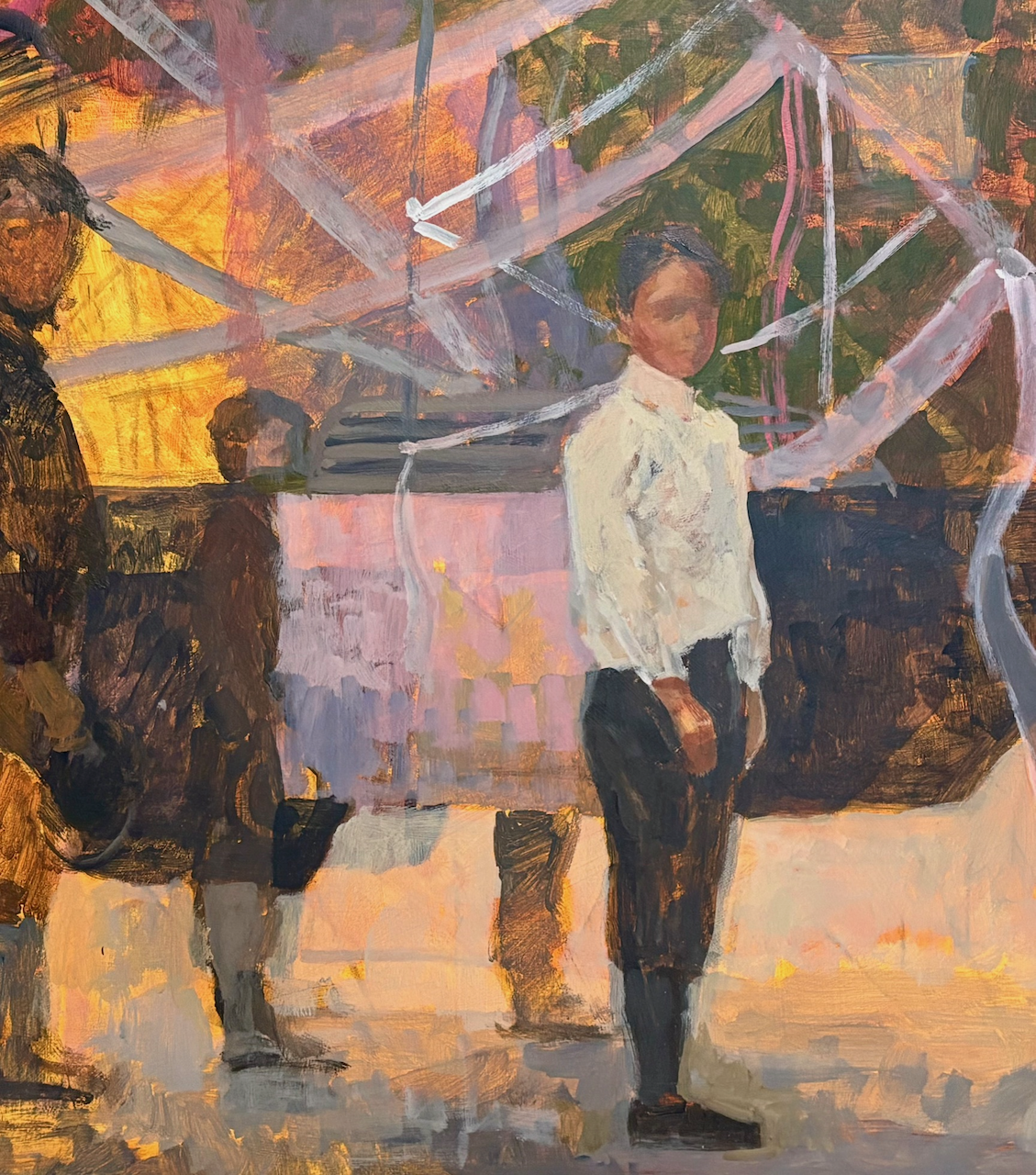
Above are two oil sketches based on photographs from the 1950s of the parade and a detail from the final Italian historical narrative painting
The Story of Louis Bencivenga and the St. Michael’s Parade
Louis Bencievenga contracted typhoid fever as a child in 1921. He was desperately ill and, like many at that time, was not expected to recover. Italian tradition at the time was to give money to the family of people who were ill. Louis’ mother promised to donate all the money they had received to St. Michael if Louis survived. She also promised to build a boat for the St. Michael’s parade that would be covered in white satin ribbon (an expensive commodity at the time). Louis did survive and the float his mother made was featured in the St. Michael’s Parade for many years after his recovery. It supposedly remains in the basement of the Principessa Elena building. The artwork is taken from a 1922 photo of Louis in the St. Michael’s parade in front of the white ribboned boat.